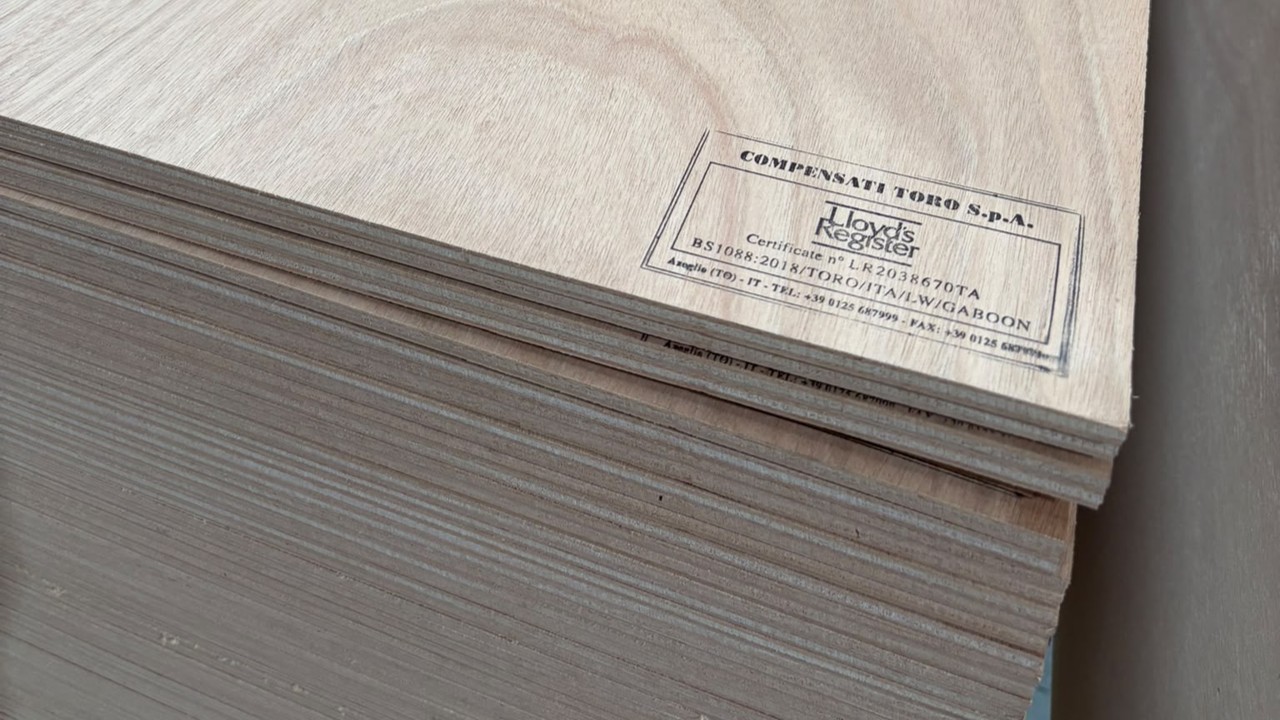
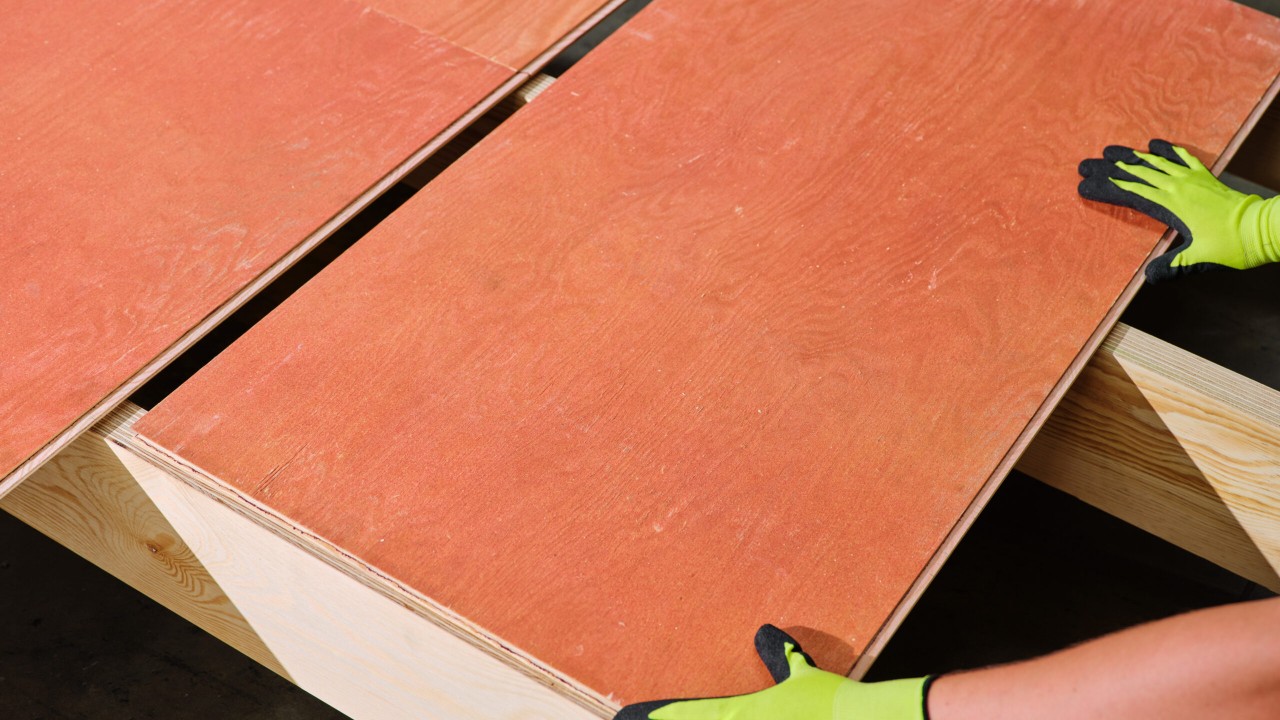
When working with wood-based panels, you sometimes have to ensure that you use panels that are ‘fire treated’ or ‘fire-retardant’. Sometimes, it’s also a legal requirement. To help you understand the Euroclass system better, we’ve created this brief explainer.
Fire Retardant (FR) wood panel products have been specially treated to react to a fire. These treatments help slow down spread of flames and reduces how quickly the fire can develop. This gives people more time to react and evacuate safely, and saves lives. Most types of wood panel can be purchased in FR variants; including plywood, MDF, OSB and chipboard.
FR wood products across the UK and Europe are classified using a harmonised European system under EN 13501-1. This means products are tested and rated using the same standards across different countries, making fire classifications universal and therefore much easier to understand. Having this harmonised system means that everyone is working from the same testing system. Rather than different national standards being used, EN 13501-1 provides a consistent way to assess and compare fire performance across the market. The Euroclass system is regulated by the EU under the Construction Products Regulation.
—
>> What Does Euroclass B Mean?
Under the European fire classification system, materials are rated from A1 (best score, not combustible) to F (lowest score, no determined performance, and not fire retardant at all). The full range of scoring are as follows:
A1 | A2 | B | C | D | E | F
The most common Euroclass rating that you’ll encounter in the UK is typically Euroclass B. This rating is the minimum level of fire retardancy required for most public and residential buildings. Receiving a B rating means that the product in question makes a limited contribution to a fire spreading, and can be described as ‘Fire Retardant’. Anything lower than a B is deemed to be generally ‘Not Fire Retardant’.
It’s worth noting that plywood (and other wood products, such as MDF, chipboard and OSB) will always remain combustible to a degree. FR treatment, however, will improve the fire retardancy of a product – especially when compared to an untreated wood product. An FR treated panel should be able to slow the spread of flames, and assist in reducing flame growth. This ultimately improves the overall fire safety performance of wood based panels.
>> Understanding the full Euroclass classification
You will often see the FR plywood classification written with additional lettering on the end (such as B-s1,d0). The extra letters and numbers on this classification relate to two important parts of fire performance.
- The ‘S‘ tells you how much smoke the panel produces under test conditions (The ‘Smoke’ Classification).
- The ‘D‘ tells you how many droplets the panel produces under test conditions (The ‘Droplet’ Classification.
These are both key parts of the harmonised European standard. They give a more complete picture of how an FR treated wood based panel may behave during a fire.
—
>> Understanding the ‘S’ Smoke Classification
The ‘S’ rating measures how much smoke the product produces when burning. Smoke is one of the biggest dangers in a fire because it reduces visibility, and can also make evacuation much more difficult. This presents a risk to life, and FR products are typically designed to reduce the amount of smoke produced when burning.
There are three ‘S’ classifications:
- s1 | Very little smoke produced (Best Result)
- s2 | Moderate levels of smoke produced
- s3 | Higher/Unspecified smoke produced
A s1 classification is the best result – and demonstrates that the product produced very low levels of smoke under test conditions. It’s important to understand that this smoke classification relates only to the performance of the FR plywood itself under test conditions. A B-s1,d0 FR panel will, however, still produce less smoke than an untreated plywood panel.
The amount of smoke during a real fire would depend on other variables. This includes the fire retardancy of other items in the affected room, and what kind of fire is taking place (sources of ignition, and what is fuelling the fire). Ultimately, the ‘s1’ performance of an FR panel does not necessarily mean that the fire or room environment will contain less smoke within – just that the panel itself would not be contributing to smoke production.
—
>> Understanding the ‘D’ Droplet Classification
The ‘D’ rating measures whether the product produces flaming droplets or particles during a fire. Burning droplets can spread fire to nearby materials, flooring or furnishing – which increases the overall fire risk.
There are three ‘D’ classifications:
- d0 | No flaming droplets produced (Best Result)
- d1 | Limited flaming droplets produced
- d2 | Higher/unclassified droplets produced
A d0 classification is therefore the highest performance level, which means the product did not produce flaming droplets during testing. As above, this is again based on what a panel produces under test conditions.
—
>> So, What does Euroclass B-s1,d0 mean?
A plywood that has been classified as B-s1,d0 has achieved the following (under test conditions):
- B | Has very limited contribution to fire
- s1 | Produces very little smoke
- d0 | Doesn’t produce flaming droplets
For a wood-based panel product, this represents a very high level of fire performance.
Important point to remember: If a panel is modified in any way (i.e. painted, lacquered, veneered), the end product needs to be independently re-tested to ensure it still meets the European FR & AVCP standard performance. Altering a panel in any way can affect the FR integrity of a panel, and reduce its’ effectiveness during a fire.
—
Need further assistance? Our team of Product Experts are always on hand to help. Give us a call on 01708 864245, or send us an email at [email protected]. You can also visit our Fire Rated Panels page to see our collection of FR products.