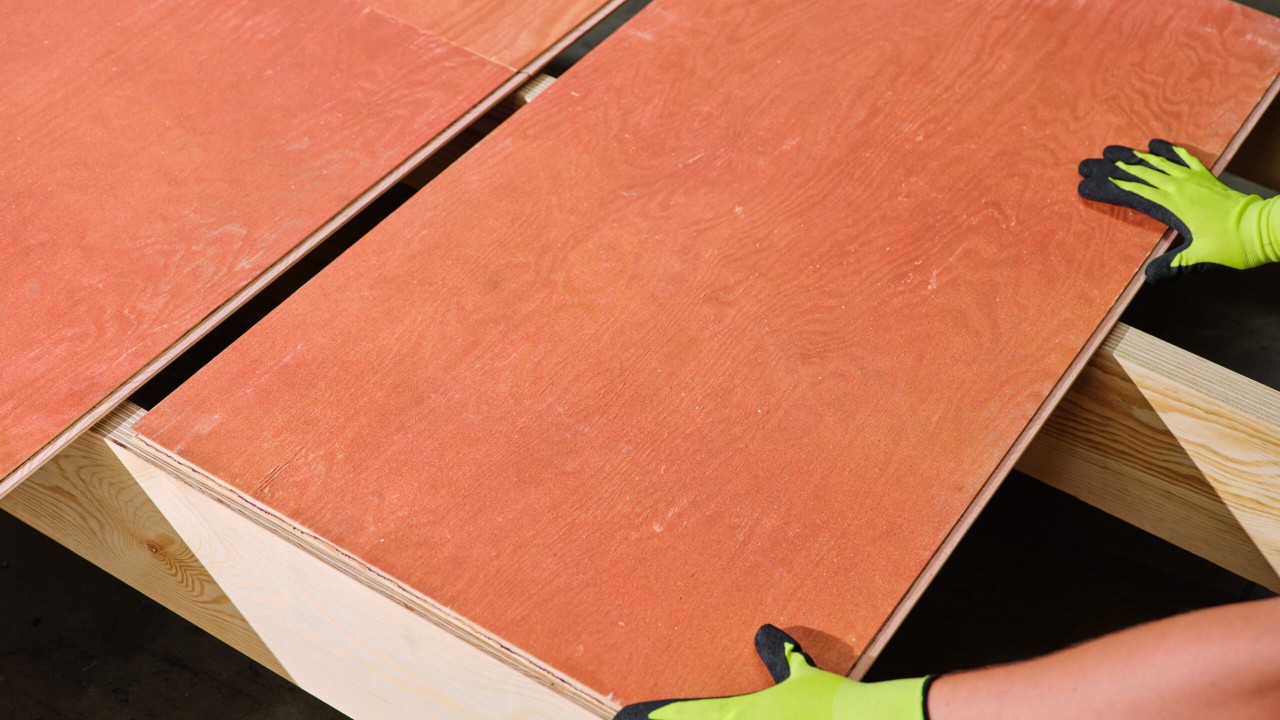
Fire Retardant (FR) plywoods are panels that have been treated to improve how they perform in a fire. Due to the fire-retardant impregnation process, FR plywood behaves differently to standard untreated plywood. It should therefore be handled, conditioned, processed and finished accordingly.
Most FR Plywoods are sold ‘already treated’ (the manufacturer adds the fire impregnation chemicals whilst creating each FR panel at the mill). This ensures that each panel is professionally treated to Euroclass standards. Resellers, such as DHH Panel Products, then sell the product as ‘ready-to-use’, which means that it can be used without any further treatment required.
—
Correct Storage & Handling
Because FR treatment increases the hygroscopic nature of plywood, incorrect storage can lead to moisture absorption, salt leaching, veneer movement, warping and mould growth. It’s therefore important that you store your FR panels correctly.
Upon Delivery:
1) Inspect panels immediately upon receipt.
2) Ensure packs remain dry and fully supported.
3) Report any damage prior to processing.
4) Store panels flat and level.
Storage Conditions:
1) Store internally in dry, well-ventilated conditions.
2) Store in a recommended storage humidity of approx. 30–50% RH.
3) Spread or fan the panels so as to acclimatise to the ambient conditions.
4) Avoid direct exposure to rain, damp floors or external weather conditions.
5) Protect from direct sunlight and rapid temperature changes.
—
General Processing Guidance
Before machining, veneering, lacquering, or general processing you should always condition your panels correctly. It’s also important to machine FR Plywood in a certain way, as to avoid accidentally removing any of the surface-level FR protection.
Conditioning Before Processing:
1) Allow boards to acclimatise for a minimum of 48 to 72 hours.
2) Ensure moisture content has stabilised before processing, and
3) Avoid processing cold or damp panels directly from storage.
When Machining:
1) Use sharp tooling only, and avoid excessive heat build-up during machining.
2) Minimise aggressive sanding, and only very lightly sand where necessary.
—
Important Product Information
FR treated plywood is not a decorative panel product. The fire retardant impregnation process can naturally alter the appearance of the panel compared to untreated plywood. Slight visual differences should therefore always be expected.
Possible characteristics may include:
1) Colour variation or darkening
2) Surface shading differences
3) Raised grain
4) Minor surface irregularities.
5) Different coating absorption behaviour,
6) Increased hygroscopicity (greater moisture sensitivity),
7) Surface salt leaching or crystallisation caused by FR salts naturally migrating to the panel surface (particularly where boards are exposed to moisture, humidity fluctuations or condensation).
These characteristics are normal for FR treated plywood and do not affect the certified fire performance of the panel. Minor aesthetic variation should therefore be expected and accepted as part of the FR treatment process.
To minimise the risk of salt leaching or crystallisation:
1) Store panels in stable, dry internal conditions for long periods.
2) Avoid exposure to moisture or condensation.
3) Allow proper acclimatisation before processing.
Any light surface residue can normally be removed prior to processing with a dry cloth/ brush or very light sanding where appropriate.
—
Guidance for Veneering FR Plywood
Important: If FR plywood is modified in any way, the fire performance classification may be affected. Please remember to get your panels independently re-assessed after veneering.
Before Veneering:
1) Ensure panels are fully conditioned and moisture stabilised.
2) Inspect surfaces for salt residue or contamination.
3) Carry out adhesion trials before production.
4) Confirm adhesive compatibility with FR treated substrates.
5) Store veneer materials under same environmental conditions as the plywood.
During Veneering:
1) Maintain stable workshop humidity and temperature.
2) Avoid excessive press temperatures.
3) Ensure even adhesive spread rates.
4) Avoid introducing excessive moisture.
5) Use balanced construction where possible.
After Veneering:
1) Allow panels to condition before trimming or finishing.
2) Check for veneer movement or telegraphing.
3) Store veneered panels flat and fully supported.
4) Avoid rapid environmental changes immediately after pressing.
—
Guidance for Lacquering/Finishing FR Plywood
Important: If FR plywood is modified in any way, the fire performance classification may be affected. Please remember to get your panels independently re-assessed after lacquering.
Before Lacquering/Finishing:
1) Ensure that panels are fully dry and conditioned.
2) Carry out coating compatibility trials before production.
3) Remove all dust and possible salt residue.
4) Ensure that workshop humidity and temperature are controlled.
During Lacquering/Finishing:
1) Apply coatings evenly (in accordance with coating manufacturer recommendations).
2) Avoid excessive wet film application.
3) Maintain adequate airflow and drying conditions.
4) Avoid trapping moisture beneath coating systems.
After Lacquering/Finishing:
1) Allow sufficient curing time before stacking or wrapping.
2) Protect finished panels from condensation and moisture.
3) Store finished panels flat and fully supported.
4) Re-check appearance after full cure (as FR substrates may react differently).
—
Important Fire Performance Notice!
If FR plywood is modified in any way after treatment, the fire performance classification may be affected. This includes painting, cutting, machining, lacquering, veneering, laminating, and applying overlays or coating.
Where further decorative or finishing processes are applied, the finished product should be independently assessed. This includes re-testing by a recognised certified body where necessary. Doing so will confirm that the required FR performance classification is still achieved. Customers are responsible for ensuring that the final processed product remains compliant with the required fire specification for the intended application.
—
Our FR Plywood Recommendations
Correct handling, conditioning and finishing procedures are essential to achieving the best possible performance and appearance from FR treated plywood products. We therefore strongly recommend:
1) Pre-production testing of all adhesives and coatings.
2) Environmental conditioning before and after processing.
3) Trial veneering and lacquering before full production.
4) Stable workshop humidity & temperature throughout manufacture.
5) Sample approval prior to project manufacture.
—
Have a pressing question? Please don’t hesitate to give our FR Plywood experts a call on 01708 864245 for a chat. You can also contact us via email at [email protected] for further assistance, or reach out to us on our Instagram or LinkedIn.